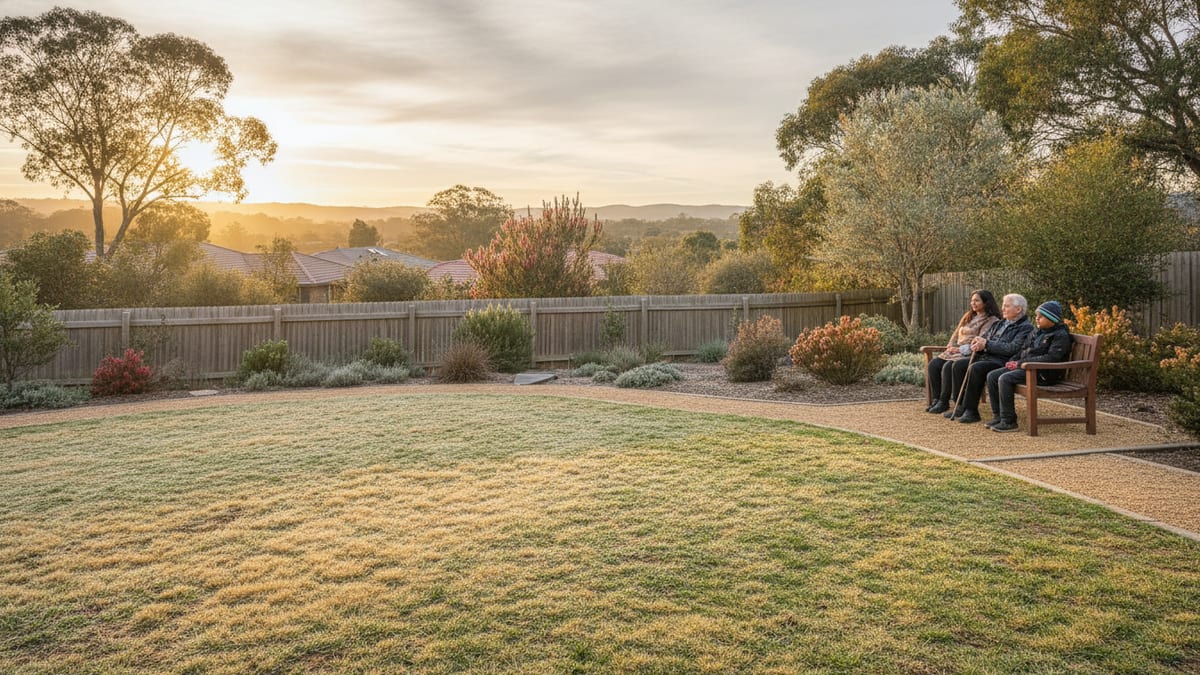
Winter lawns in Sydney often turn yellow or pale. Sometimes it's normal dormancy. Sometimes it's disease. Here's how to know which.
Why Grass Yellows in Winter
Dormancy: Buffalo and some other warm-season grasses slow growth and fade in winter. This is normal. They'll green up when warmth returns.
Nitrogen decline: Winter rain leaches nitrogen from soil. Without growing season feeding, grass can look pale.
Cool temps: Cooler weather slows photosynthesis. Grass produces less chlorophyll. It's weaker looking, but healthy.
Less light: June is the darkest month. Less sun means less vigour.
Most winter yellowing is normal and temporary.
When to Worry
Yellow grass becomes a concern if:
It's patchy, not uniform. Uniform pale yellowing across the whole lawn is dormancy or nitrogen. Patches of dead or dying grass is disease.
It's accompanied by brown, wet areas. This can indicate fungal disease or waterlogging.
The grass pulls up easily. Dead roots mean real disease, not just winter sleep.
It's progressing (getting worse over weeks). Normal dormancy stays stable. Disease spreads.
Common Winter Grass Diseases
Brown Patch (Rhizoctonia): Brown, dead patches that appear overnight or over a few days. Often circular. Edges are darker than centres. Occurs in humid, mild winters.
Pythium (Damping Off): Very wet-looking patches. Grass literally rots. Rare in Sydney but can happen in waterlogged spots.
Dollar Spot: Small circular patches the size of a coin. Rare in winter, more common in spring.
What to Do
If it's uniform yellowing: Probably normal. Do nothing. Feed in September when it wakes up.
If it's patchy: Get it checked. Bring a sample or photos to your local nursery.
If it's waterlogged: Improve drainage. Poor drainage leads to disease.
If it's disease: Options include:
- Remove affected grass and reseed when it warms
- Apply fungicide (follow label directions)
- Improve drainage and air flow
- Change mowing height (too short increases stress)
Prevention
Most winter lawn problems come down to:
- Poor drainage (the #1 culprit for disease)
- Wrong grass type for your conditions
- Mowing too short (weakens grass)
- No air circulation (dense planting, wet soil)
Fix these and disease becomes rare.
Buffalo vs. Couch Reality
Buffalo yellows noticeably in winter. It's normal. Couch stays more green because it's less dormant. But couch doesn't tolerate shade as well.
Choose your grass knowing it'll fade in winter. If you can't accept winter yellowing, couch is your answer. But you trade some shade tolerance.
The Healthy Winter Lawn
A healthy lawn might be pale in winter, but it:
- Has no dead patches
- Doesn't pull up easily
- Isn't soggy
- Greens up reliably in spring
Timeline
Most yellowing lawns are completely green again by late September. If yellowing persists into October, something deeper is wrong.
Bottom Line
Winter yellowing is usually just dormancy. But if it's patchy, mushy, or accompanied by dead grass, get it checked. Early treatment prevents serious problems.
In most cases, the best winter lawn care is patience. Spring will come, and your grass will green up again.