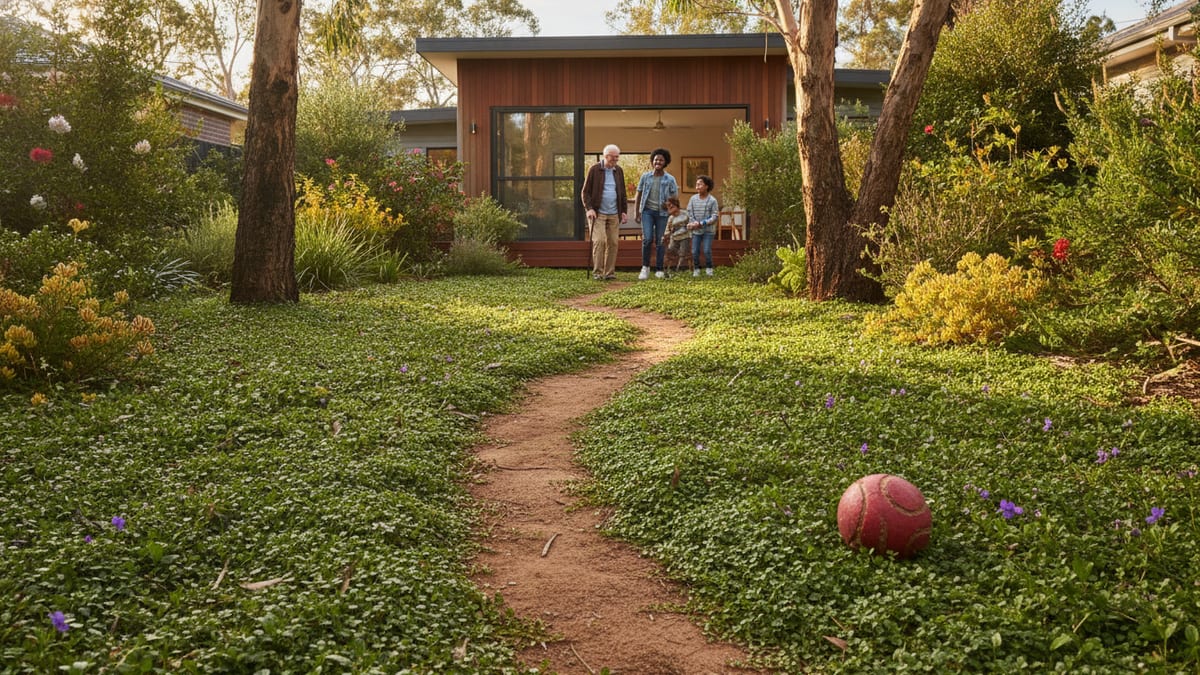
A traditional grass lawn isn't the only option. If you have kids or dogs (or just want something lower-maintenance), native ground covers and alternatives offer durability and beauty.
Microlaena Stipoides (Weeping Meadow Grass)
A native tussock grass with fine, drooping foliage. Soft underfoot, beautiful appearance, and incredibly tough.
Pros: Handles shade better than most, very hardy, erosion control on slopes, attractive year-round
Cons: Slower to establish, more expensive to install, clumpy habit (not a uniform lawn)
Best for: Shade areas, slopes, native gardens, homes willing to accept a less-uniform look
Native Ground Covers
Solanum parvifolium — Purple flowers, dense, very hardy, dog-friendly
Einadia polygonoides — Fine foliage, compact, tolerates poor soil
Myoporum parvifolium — White flowers, spreads fast, very low-maintenance
Prostanthera incisa (Mini Mint Bush) — Fragrant, tiny flowers, attractive foliage
These aren't lawns in the traditional sense. They're more like dense ground covers. They handle use well and need less water than grass.
Woolly Pyrethrum
Not native, but incredibly tough. Silver-green foliage, pink flowers, incredibly drought-tolerant once established. Kids and dogs can't kill it.
Pros: Extremely hardy, drought-tolerant, soft texture, pretty flowers
Cons: Not native, deciduous in winter, attracts few wildlife
Clover (White Clover Mix)
A native/naturalized option. Low-growing, nitrogen-fixing, incredibly tough.
Pros: Handles heavy wear, requires no fertiliser, soft, dog-friendly
Cons: Not green year-round in winter, looks unkempt without mowing, bare patches appear quickly without maintenance
The Hybrid Approach
Some families do a mix: traditional grass in the main play area where durability matters, and native ground covers or clover elsewhere.
This gives you the best of both worlds — a tidy play zone and waterwise, low-maintenance alternatives in secondary areas.
Installation and Maintenance
Ground covers need good soil preparation and regular watering for the first 6–12 months. Once established, they're lower-maintenance than grass.
They don't need mowing (mostly), but may need occasional trimming to keep shape.
The Cost
Establishing ground covers often costs more upfront than grass (they're slower to fill in). But long-term maintenance is cheaper.
Real-World Reality
A native lawn alternative works brilliantly for families ready to accept it won't look like a bowling green. It'll look natural, feel soft, and handle anything kids or dogs throw at it.
For perfect green, uniform coverage, a traditional buffalo or couch lawn is still best. But for durability, low-maintenance, and waterwise credentials, ground covers are worth considering.
Final Thought
Your lawn doesn't have to be grass. What matters is choosing something that works for your lifestyle, your soil, and your tolerance for maintenance. Talk to us about what might suit your family and your garden.