A courtyard can be your garden's best feature — intimate, protected, and full of possibility. But only if it's designed well. Here are the moves that actually work.
Vertical is Your Friend
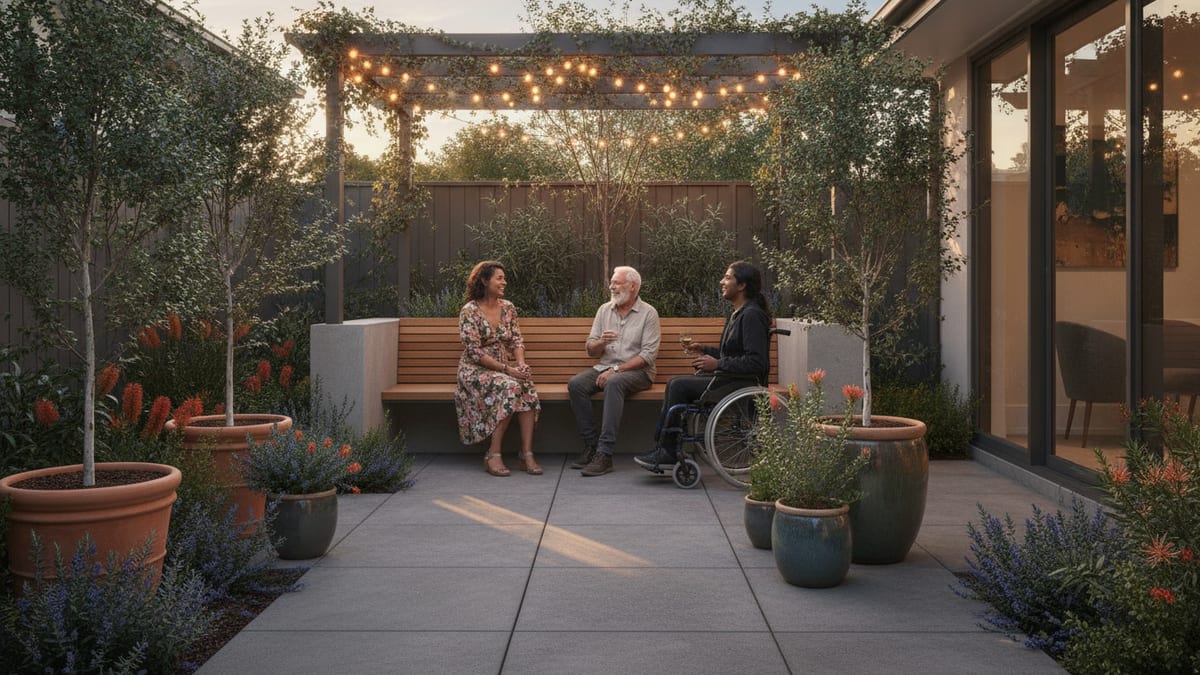
With limited floor space, go up. Tall plants, wall trellises, climbing vines, multi-level planting. This creates enclosure and visual interest without eating into usable space.
A wall of trained grevillea or clematis becomes a living screen. A pleached lilly pilly becomes an elegant frame. Vertical planting transforms a poky courtyard into a garden with presence.
Define Zones
Even a small space works better when it's divided. A dining area, a seating nook, a planting bed, a pathway. These zones create rhythm and make the space feel larger.
Use paving changes, subtle level shifts, or planting to mark zones without blocking sight lines.
Limit Your Palette
Cramped courtyards look busier with too many plant types. Choose 4–6 plants and repeat them throughout the space. This creates cohesion and calm.
Repeat colours too. Stick to a narrow palette — greens with a single accent colour, for example — rather than a rainbow.
Choose Multi-Functional Plants
A plant should earn its space. Pick species that offer:
- Structural form (stays handsome year-round)
- Seasonal colour or interest
- Wildlife value
- Fragrance or texture
Skip plants that are only pretty for two weeks. In a small space, every plant works.
Hardscape Matters More
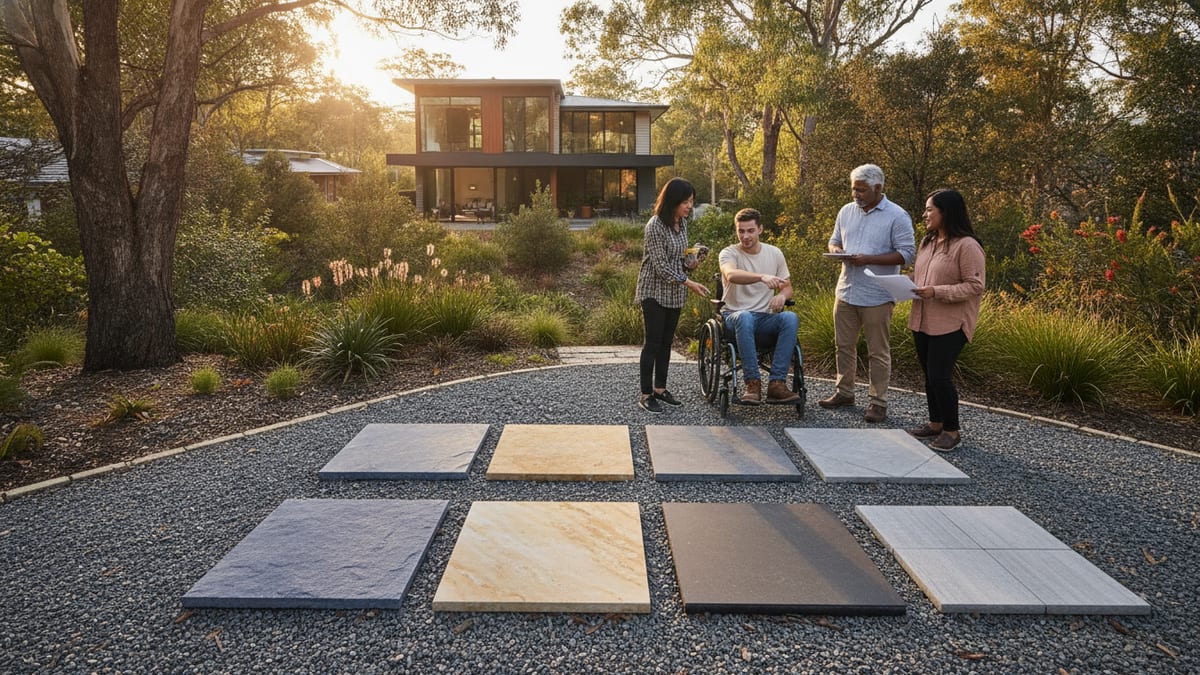
In a small courtyard, paving, walls, and screens are as important as plants. Quality materials — real sandstone, good timber, properly laid pavers — elevate the whole space.
Poor-quality hardscaping (cracked concrete, wonky pavers) will always feel cheap, no matter what you plant.
Borrow Views
If your courtyard overlooks a neighbour's tree or the bushland beyond, frame that view. Design your planting to lead the eye outward. This makes the space feel larger.
If your view is just a fence, create an internal focal point — a feature plant, a sculpture, a water element.
Water Features
Even a small water feature (a tiny pond, a recirculating fountain) changes a courtyard's feel entirely. Water brings movement, sound, and a sense of calm.
It doesn't have to be big. A 1m× 1m pond with a small spout is enough.
Lighting
A courtyard you can only enjoy in daylight is half a courtyard. Simple solar lights along edges, a soft uplighter on a feature plant, or a string light canopy means your courtyard becomes an outdoor room.
The Path Principle
Even in a 3m× 3m space, create a sense of journey. Don't plonk a seating area in the exact centre. Place it slightly off-centre, with a path leading to it. This creates a sense of discovery.
Scale and Proportion
Your plants should be in proportion to your space. Massive specimens in a tiny courtyard feel wrong. Undersized plants look lost.
A medium-sized tree (4–6m), smaller shrubs (2–3m), and low ground covers usually hit the sweet spot.
The Result
A well-designed courtyard becomes the heart of your home. It's the place you linger, where you notice the season change, where you entertain. It feels spacious despite its size because every element earns its place.
Small isn't a limitation. It's an opportunity to design something intentional and beautiful.