Clay soil gets a bad rap. Yes, it's heavy and drains slowly. But here's the secret: a lot of beautiful Australian native plants actually love clay. They're adapted to it. Plant them in clay, and they'll thrive harder than they will in improved soil.
Here are ten clay-loving natives for the Hills District:
1. Lilly Pilly (Syzygium spp.)
A beautiful screening plant with glossy leaves and cream flowers. Tolerates clay, semi-shade, and regular pruning. Red berries attract birds.
2. Grevillea 'Robusta'
Not the big sprawling grevilleas — this variety is tight, tidy, and compact. Orange-red flowers, fine foliage. Excellent in clay.
3. Banksias (various species)
Banksia serrata and B. spinulosa both thrive in clay on slopes and in full sun. Dramatic flowers, wildlife magnet, architectural form.
4. Photinia (Photinia robusta)
A native shrub with deep green foliage and small white flowers. Tolerates clay, shade, and poor drainage better than you'd expect.
5. Acacia (Wattle varieties)
Acacia longifolia and A. ulicifolia are vigorous, clay-tolerant, and flower prolifically in spring. Great for screening.
6. Fleuroya
An underrated small native shrub with fine foliage and yellow button-like flowers. Hardy in clay and semi-shade.
7. Eucalyptus (selected species)
Eucalyptus saligna and E. robusta are clay-tolerant. Yes, they get big, but they're stunning and attract native birds constantly.
8. Prostanthera (Mint Bush)
Purple, pink, or white flowers, fragrant foliage. Prostanthera incisa handles clay well and looks delicate despite being tough.
9. Melaleuca (Tea Tree)
Melaleuca styphelioides and similar species are adapted to heavy, wet soils. Red or cream flowers, fine structure.
10. Callistemon (Bottlebrush)
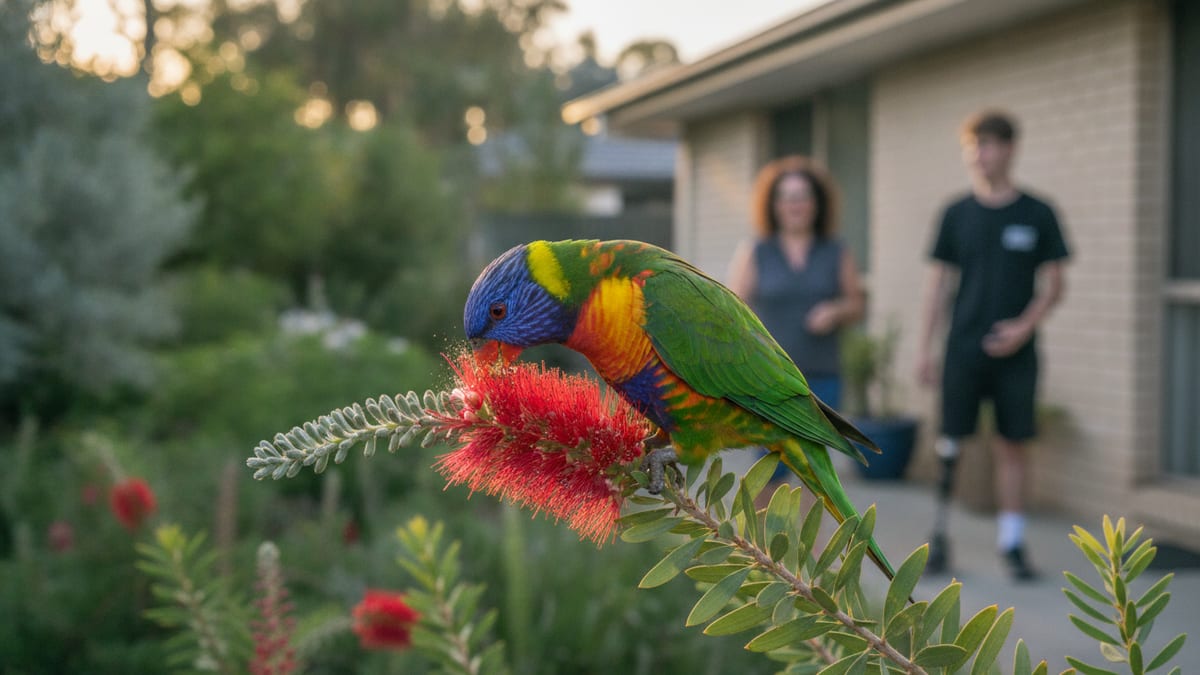
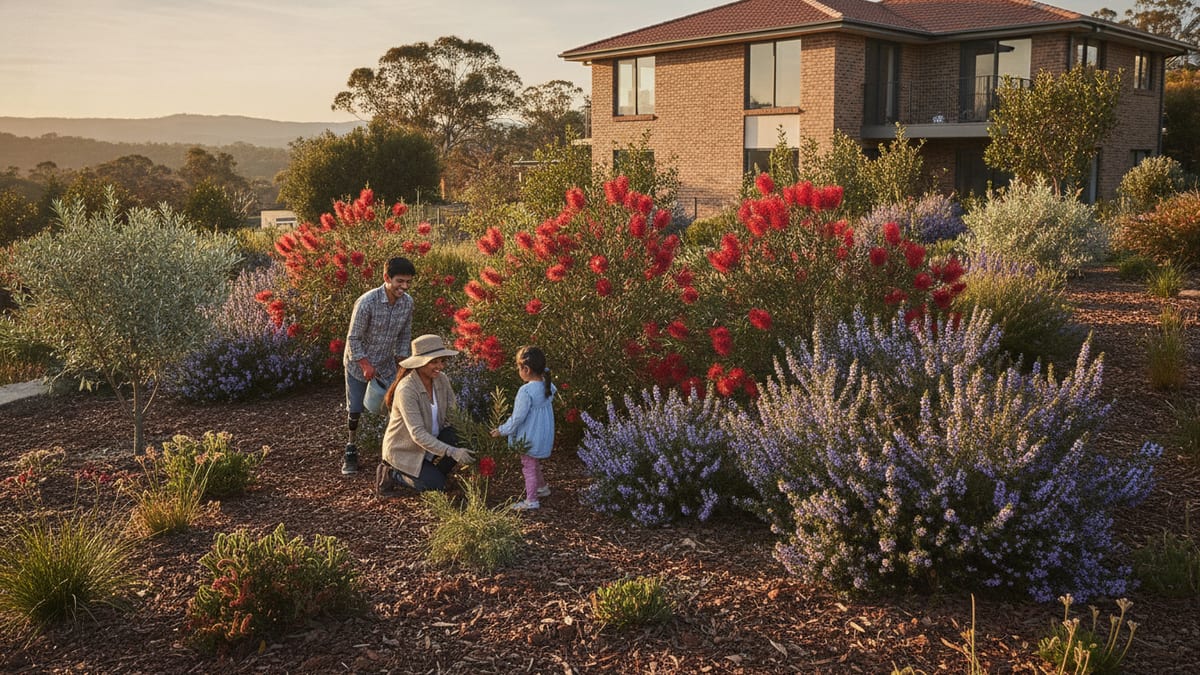
Red, yellow, or pink flower spikes. Many callistemon species thrive in clay and poor drainage. Full sun lovers.
The Clay Advantage
Here's why these plants do so well in clay: they evolved in Australian clay soils. They have deep root systems adapted to clay's structure. They don't need the rich, improved soils that many introduced plants crave.
Plant them in clay with minimal soil amendment — just add mulch and compost on top — and they'll establish faster than in "improved" garden beds.
Spacing and Placement
Most of these are vigorous. Plant them 2–3 metres apart for shrubs, wider for large species like eucalypts. They'll fill a garden quickly.
Watering
After establishment (6–12 months), most need minimal watering. Clay holds moisture, which suits them. In extreme drought, a deep water every 2–3 weeks keeps them happy.
The Waterwise Win
Because these plants are suited to clay and our climate, they need less water, less fussing, and less fertiliser. That means lower bills, less work, and a garden that looks like it belongs in the Hills District — because it does.
Start with these ten. Mix them with other natives, and you'll have a thriving, authentic, low-maintenance garden.